The Coptic Orthodox Church recently commemorated the seventeenth centenary of the First Ecumenical Council of Nicaea, a defining moment that continues to shape how believers worship and confess their faith today. The update was shared by the Instagram page eastern christians, which reported the events held at Saint Marks Cathedral in Abbassiya.
The celebration carried the theme Nicaea A Living Faith and drew attention to the lasting influence of the council first held in AD 325. The Nicene Creed that came out of that gathering remains a confession that unites Christians across the world. Many churches still recite it during worship and its words have inspired hymns, chants, and modern songs that help believers express their devotion.
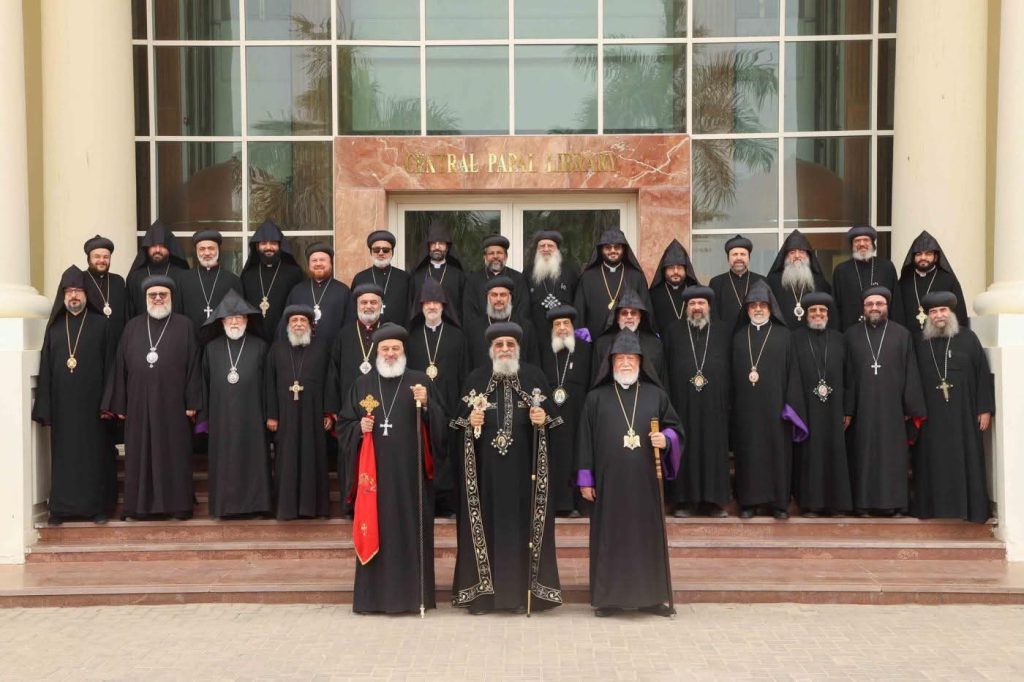
According to the report, His Holiness Pope Tawadros the Second led a solemn procession in which the relics of Saint Athanasius were brought from the Fathers Shrine beneath the cathedral into the main church. His Holiness was joined by metropolitans, bishops, patriarchal vicars, priests, and the deacons choir.
Worshippers of different ages lined the path of the procession. They chanted the Nicene Creed in a special hymn while choirs filled the cathedral courtyard with the distinct sound of traditional Coptic worship. The reverence of the moment and the depth of the music offered a reminder of the rich heritage carried by the Coptic Church, a heritage that has influenced Christian worship far beyond its own community.
A photograph was later taken on the cathedral steps, showing His Holiness holding the relics of Saint Athanasius.
The page also noted that His Holiness described Athanasius as a voice of unity and truth at the original council and a guardian of doctrine whose impact continues to guide believers today.
For many Christians, this commemoration is more than a look back at history. It is a reminder that the foundations of our worship are rooted in moments like Nicaea. The creed that was formed there still shapes our singing, our confessions, and our understanding of the faith. The celebration serves as a beautiful picture of how the global body of Christ continues to draw strength from its shared heritage.